

Wabi-Sabi
- hannah2moore
- Jun 16
- 3 min read
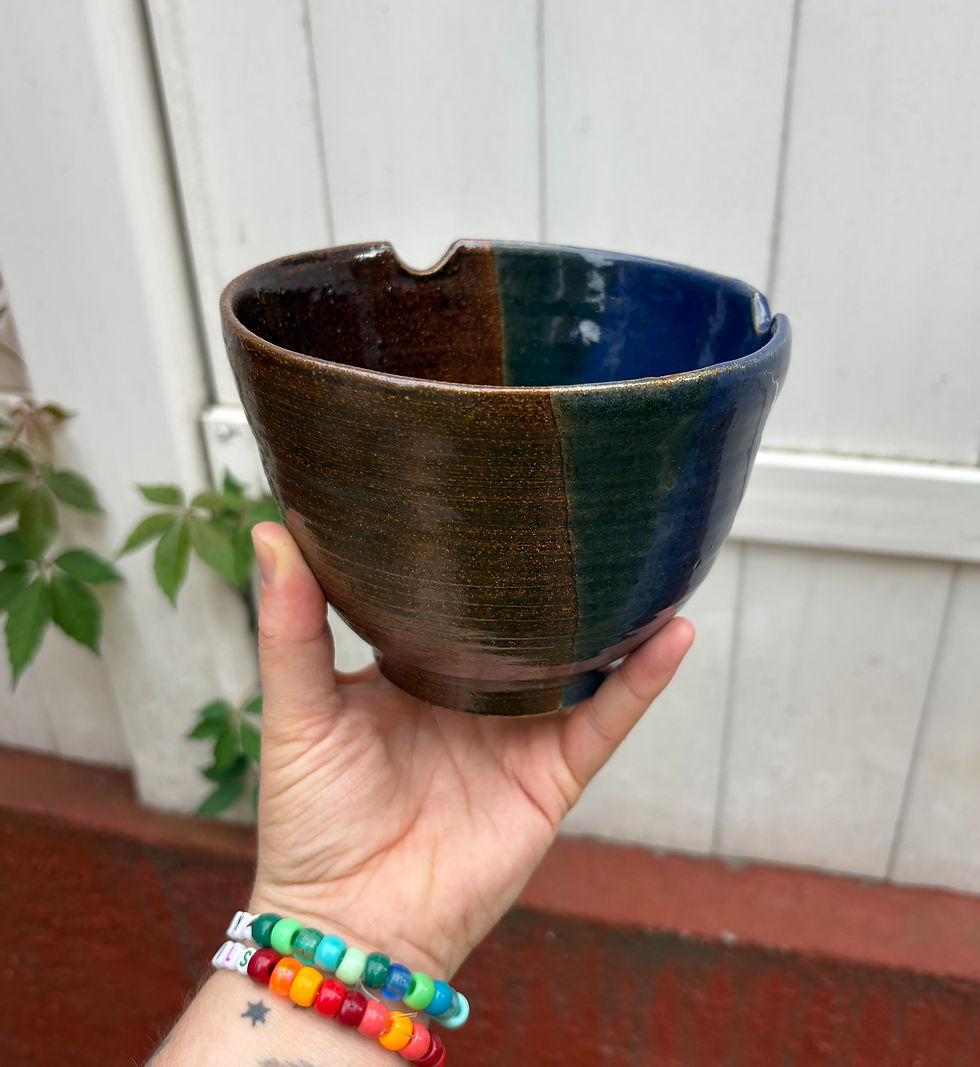
I have been thinking a lot about the Japanese aesthetic philosophy of Wabi-Sabi - the idea of finding beauty in imperfection, impermanence, and incompleteness - and Zellij Tilework - beautiful intricate tile patterns with some pieces purposely broken or misplaces. And the Islamic foundational cultural philosophy that only Allah (God for those who don't know) is perfect. I’ve seen these ideas show up in a pottery competition show, in grad school during an art activity about trauma, in speaking to people about their beliefs, and again at Epcot a few years ago. They have stayed with me, resurfacing often when I work on my own art - especially pottery, but really in everything I’ve ever created.

I have been making more art in the past five years than I ever have in my life. Maybe I have more inspiration, or I’m more attuned to my creativity, or more confident in my ability to bring ideas to life. Maybe it’s out of survival, or simply because I have more time to create. Whatever the reason, I’ve seen myself grow in so many ways as an artist.
By making art and sharing it on social media, more people see my work - and with that comes more criticism and comparison. This intensifies when I think about selling anything. I feel a lot of pressure and confusion around pricing and selling my work (and this started longg before AI “art”). So many questions come up: How do I find the right setting to showcase and sell? What price reflects my effort and ideas? How do I reach the right audience? How should I price commissions versus pieces within a project?

With more eyes on my art and concerns about pricing, I’m reminded again of these philosophies. I’ve received “compliments” about how “professional” my work looks. I’ve also been told it isn’t clean enough, or that I should remove certain imperfections to make it more desirable. I’ve been told it wasn’t what they had imaged and they don’t try to hide their disappointment. I don’t claim my art is hyperrealistic, but I know it can depict real things with some accuracy - often with less abstraction or expressionism than others. I know that I cannot read people's minds to imagine exactly what they are wanting. Still, I feel a quiet unease when I hear these comments. I have this tickling at the back of my head and see stars. Something lingers, making me question myself.
What does it mean to be a professional artist? As more things become mass-produced - clothing, pottery, glassware, digital design - we seem to be losing our sense of what it means to connect with art on a human level. That someone can be inspired by the world around them, and create an idea from nothing with their hands. That takes time, intention, and dedication. And yet now we expect “perfection” - clean lines, polished edges, reproducible, easily digestible images or items.
What happened to being challenged by art? What happened to the flexibility needed when collaborating? What happened to artistic identity? What happened to the understanding that neither art nor humans are perfect - and that this is something to celebrate, not erase or criticize?
I’ve held onto the practice I had as a child of daydreaming about art projects - writing them down in my notes app or sketchbooks, maybe to return to one day and create. They range from collecting natural materials on hikes to build fairy forts, to wax seal pins and earrings, to documenting and celebrating bodies of all shapes and sizes, to poem titles, to tiny national park paintings, to ceramic wall vases, and drawings that could become a coloring book. All of these projects help me express a deep love for nature and people, and help me understand the world around me.
I have always approached my art with humility, knowing I am constantly learning and practicing. I don’t imagine it going on a museum wall or selling for hundreds of thousands of dollars. It is for me, and for the people who choose to take a moment and see the world through my eyes. I am a student of the world. And while I don’t believe in a specific God, I do believe that humans are not meant to achieve perfection. Nor to be compared to perfection and mass-production. That striving for it is a futile act that can cheapen or distract from the assignment of living. That completeness is something we reach only at the end of a life fully lived.
I hope you can spend more time each day finding beauty in imperfection, impermanence, and incompleteness.

Comments